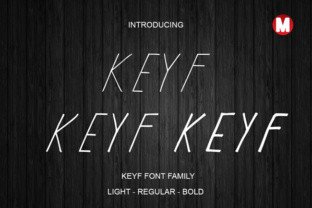
Keyf: A Bold Choice for Branding and Design
There’s a certain moment in every design project where you open a blank brand board and feel the weight of the task ahead. For me, that moment came recently while working on a boutique identity project for a small handmade shop. I needed a font that could convey warmth, personality, and a touch of elegance without overwhelming the rest of the visual system. That’s when I pulled out Keyf.
Keyf is a light bold typeface with a clean, modern edge. It’s not your typical sans serif—it has a subtle serifs that give it character without making it too traditional. The contrast between its thin strokes and thick terminals creates a dynamic visual rhythm that feels both contemporary and approachable. It’s the kind of font that commands attention but doesn’t shout.
A Visual Personality That Works
What makes Keyf stand out is its balance between strength and delicacy. The light weight gives it an airy quality, while the boldness ensures it holds up in larger formats. When I first tested it on a logo concept for the boutique, I was immediately drawn to how it captured the essence of the brand—handmade, artisanal, and intentional.
I used Keyf as the primary display font for the logo, pairing it with a more neutral sans serif for body text. The contrast worked well, allowing Keyf to take center stage without overshadowing the rest of the design. It’s a font that feels at home in both print and digital spaces, which is a big plus for any designer juggling multiple platforms.
Testing Keyf in Real Projects
Over the course of the project, I tested Keyf in several key areas: packaging mockups, social media layouts, and business card designs. On a product label, Keyf held up beautifully against intricate illustrations, offering clarity and visual interest. Its boldness made it ideal for short phrases like “Handcrafted with Love” or “Local Artisan,” which are common in branding materials.
On social media, Keyf looked sharp in Instagram headers and quotes. It maintained its readability even when scaled down, which is a rare trait for a bold typeface. I also used it in a website header, where its presence was both striking and professional. However, I noticed that in smaller sizes, especially on mobile devices, it could become slightly less legible. That said, it still performed better than many other bold fonts I’ve tested in similar contexts.
One thing I appreciated was how Keyf adapted to different design scenarios. Whether it was a greeting card with a handwritten feel or a poster with a minimalist aesthetic, Keyf had the versatility to fit in seamlessly. It’s not just a font—it’s a design tool that can shape the overall tone of a brand.
Font Pairing and Practical Tips
When it comes to pairing Keyf with other fonts, I found that it works best with complementary styles. A clean sans serif like Montserrat or Lato can provide a great contrast, while a script or handwritten font adds warmth and personality. I’ve also paired it with a modern display font like Bebas Neue for a bolder, more dynamic look.
It’s important to test Keyf in different contexts before committing to it. I recommend using it in mockups, print samples, and digital previews to ensure it maintains its readability and impact across all mediums. Also, be mindful of the font’s limitations. While it’s excellent for headlines and short texts, it may not be the best choice for long body copy or formal corporate use.
Another consideration is licensing. Always check the commercial font license before using Keyf in client work, especially if it’s being used on merchandise, websites, or print-on-demand products. Some fonts have restrictions on usage, so it’s always better to be clear about what’s allowed.
Conclusion
Keyf is a versatile and stylish typeface that brings a fresh energy to branding projects. Its bold yet elegant style makes it a strong contender for logos, invitations, and creative assets. While it may not be the go-to font for every design scenario, it certainly has a place in the toolkit of any designer looking to make a statement.
If you’re searching for a font that balances modernity with character, Keyf is worth exploring. It’s not just a typeface—it’s a design language that can elevate your brand and make your visuals stand out.